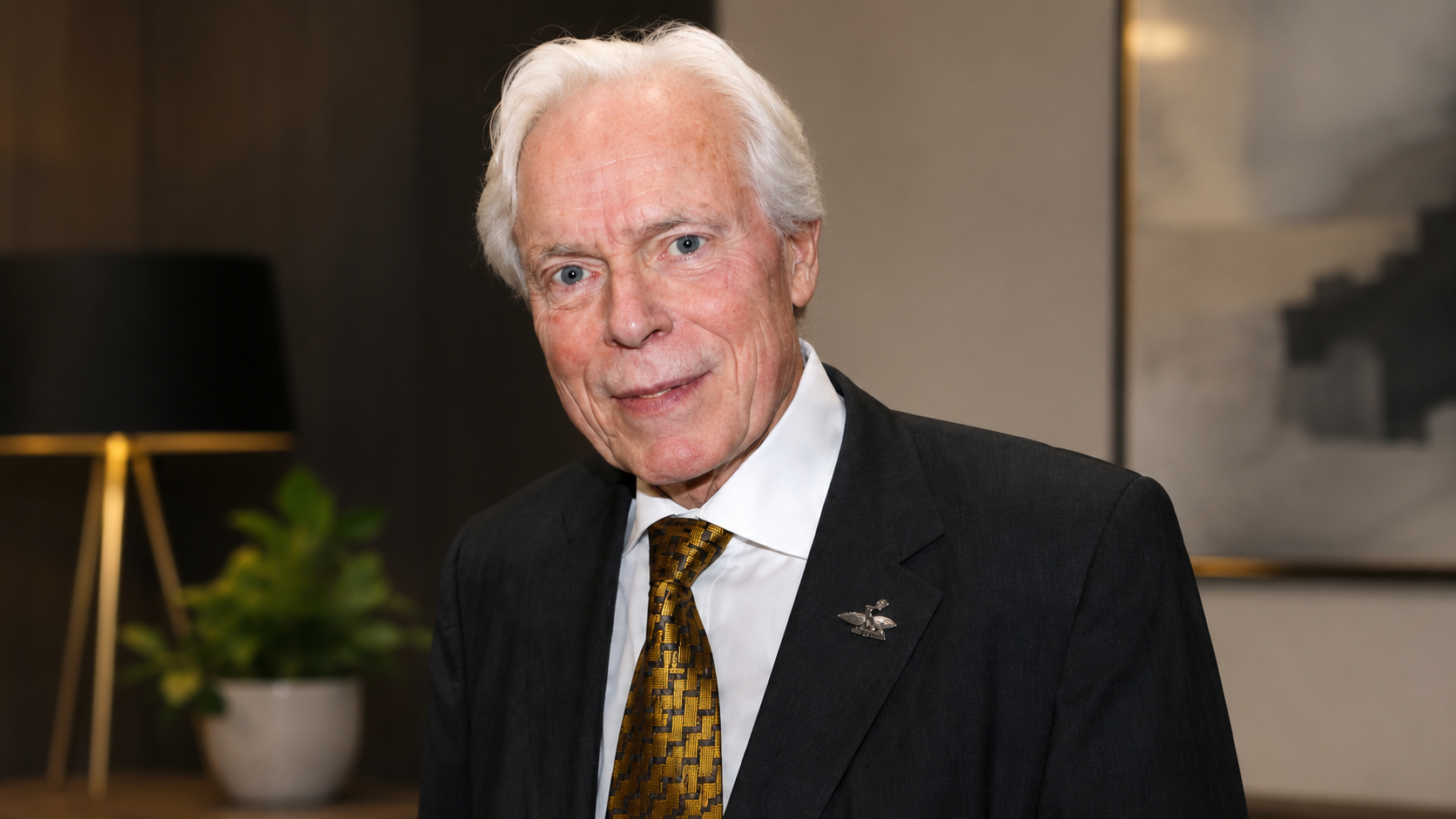
The hardest thing to sell in modern business is no longer technology, convenience, or even price. It is credibility.
Consumers have grown used to polished promises from companies that rarely behave differently once the contracts are signed. Entire industries now operate under a layer of quiet distrust, where buyers assume marketing will overstate reality and executives will optimize for short-term wins long before long-term accountability.
That backdrop matters when looking at Jorn Thulstrup and IBCA, a company shaped around a less fashionable idea: that trust itself can still function as a competitive advantage.
Rather than chasing attention through aggressive branding or inflated positioning, Thulstrup appears to have built IBCA around operational reliability, industry relationships, and the kind of consistency many businesses underestimate until markets become unstable.
It is not the loudest business strategy.
But increasingly, it may be one of the smartest.
The Problem IBCA Was Really Solving
Many companies assume customers choose providers based purely on pricing or technical capability. In reality, business clients often make decisions based on risk reduction.
That distinction sits at the center of IBCA’s market position.
Across industries connected to procurement, consulting, and operational partnerships, customers regularly face the same frustration: too many vendors promise efficiency while creating more uncertainty behind the scenes. Delays, unclear communication, inconsistent standards, and weak follow-through quietly damage trust over time.
For clients, the cost of unreliability compounds quickly.
Jorn Thulstrup appeared to recognize that many competitors were focused heavily on acquisition and visibility while neglecting the slower work of maintaining confidence over long business cycles. IBCA positioned itself differently by emphasizing predictability, responsiveness, and operational discipline rather than oversized claims.
That approach reflects a broader market truth.
As industries become more crowded, professionalism itself becomes harder to find. Businesses capable of delivering stable execution often stand out more than businesses constantly reinventing themselves.
IBCA seems to operate inside that gap.
Why Jorn Thulstrup Saw the Industry Differently
Some founders build companies around speed. Others build around scale. Jorn Thulstrup appears more interested in durability.
That difference shapes how leaders make decisions.
Where many executives respond to market pressure by constantly repositioning their companies, Thulstrup’s approach suggests a preference for clarity and steady operational alignment. That mindset can look conservative from the outside, particularly in a business environment obsessed with rapid expansion and constant reinvention.
But there is another way to interpret it.
Modern markets reward attention quickly but punish inconsistency slowly. Founders who understand that dynamic often prioritize trust-building systems long before those systems become visible publicly.
IBCA reflects that philosophy. The company’s positioning feels less centered on trend cycles and more focused on becoming dependable inside industries where reliability directly affects commercial relationships.
That requires a different kind of leadership psychology.
It demands patience, restraint, and a willingness to grow without overpromising. Those qualities rarely dominate startup headlines, yet they frequently determine which companies survive beyond their early momentum.
What Made Jorn Thulstrup Different From Competitors
In many industries, competitors eventually begin sounding identical. They use the same language, present the same value propositions, and market themselves through increasingly interchangeable messaging.
Customers notice.
IBCA appears to have separated itself by avoiding unnecessary complexity. Instead of turning expertise into performance, the company’s positioning leans toward practicality and execution.
That matters because clients buying business services are often less interested in inspiration than predictability.
Jorn Thulstrup also seems to understand that customer relationships are built through accumulated interactions rather than isolated transactions. Companies focused entirely on rapid growth sometimes sacrifice consistency in pursuit of expansion, creating internal strain that customers eventually feel.
IBCA’s approach appears more measured.
That operational restraint can create stronger long-term positioning, particularly in markets where reputation spreads quietly through professional networks rather than public advertising. Trust-based businesses often grow slower initially but become harder to replace once relationships deepen.
There is also a subtle confidence in companies that do not constantly need to announce themselves.
IBCA carries some of that energy.
The Decision That Changed IBCA
At a certain stage, every founder faces a difficult question: scale aggressively or protect operational quality.
For IBCA, one defining decision appears to have been prioritizing sustainable growth over rapid expansion pressure.
That choice is rarely simple.
Growing too cautiously can limit market share and visibility. Growing too quickly can damage the very systems customers trusted in the first place. Many businesses underestimate how fragile operational culture becomes during periods of accelerated growth.
Jorn Thulstrup appears to have understood that scaling is not only about increasing revenue. It is about preserving standards while complexity rises underneath the business.
That decision likely shaped hiring, partnerships, and customer engagement strategies across the company. It also revealed something important about Thulstrup’s broader philosophy: stability was not treated as the absence of ambition but as a strategic asset.
In modern business culture, that is almost contrarian.
Yet markets eventually expose the difference between momentum and structure. Companies built entirely around speed often struggle once external conditions become less forgiving.
IBCA seems designed with that reality in mind.
Turning Mission Into Operations
Many businesses speak confidently about values until operational pressure arrives.
That is when priorities become visible.
IBCA appears to have translated its broader philosophy into practical systems rather than abstract branding. Operational consistency requires disciplined processes, careful hiring decisions, and leadership structures capable of maintaining quality as customer expectations evolve.
Jorn Thulstrup also seems aware that trust cannot be outsourced to marketing departments alone. It has to exist inside day-to-day execution.
That affects everything from communication standards to internal accountability. In relationship-driven industries, customers often judge businesses less by isolated mistakes and more by how transparently those mistakes are handled.
Operational maturity becomes part of the product itself.
There is also the reality that businesses built around credibility must hold themselves to unusually high standards. Clients expect reliability not occasionally, but repeatedly. Maintaining that expectation over time creates pressure many companies underestimate during early growth stages.
Consistency sounds simple until scale tests it.
The Difficult Reality of Scaling
Growth changes companies.
Sometimes quietly.
As IBCA expanded, the operational demands likely became significantly more complex. Customer expectations increase alongside visibility, and businesses known for reliability often face even sharper scrutiny when systems fail or communication breaks down.
That pressure can become exhausting for leadership teams.
Jorn Thulstrup also operates in a business climate where competition evolves rapidly. Markets reward efficiency aggressively, which can tempt companies to prioritize short-term optimization over relationship quality.
The danger is subtle.
Businesses can slowly become transactional without realizing it. Internal metrics begin replacing customer understanding. Efficiency replaces attentiveness. Over time, clients notice the shift.
For companies like IBCA, protecting trust while scaling operations becomes the central challenge.
There is also the financial pressure tied to sustainable growth. Maintaining operational standards often requires slower expansion, stronger staffing structures, and investments that may not produce immediate returns.
That tradeoff can frustrate investors and leadership teams alike.
But abandoning operational discipline usually carries larger costs later.
What Jorn Thulstrup’s Story Actually Reveals
The story of Jorn Thulstrup and IBCA reflects a broader shift happening across modern business.
Customers are becoming harder to impress but easier to retain once trust is earned genuinely. In an economy saturated with aggressive positioning and short attention cycles, reliability has started to feel unusually valuable again.
That changes how durable companies are built.
IBCA’s trajectory suggests that long-term credibility may still outperform louder business models built primarily around visibility and momentum. Not because trust is trendy, but because instability has become expensive.
And perhaps that is the quiet lesson underneath Thulstrup’s approach.
The companies that last are often the ones disciplined enough to resist becoming noisier than they need to be.