
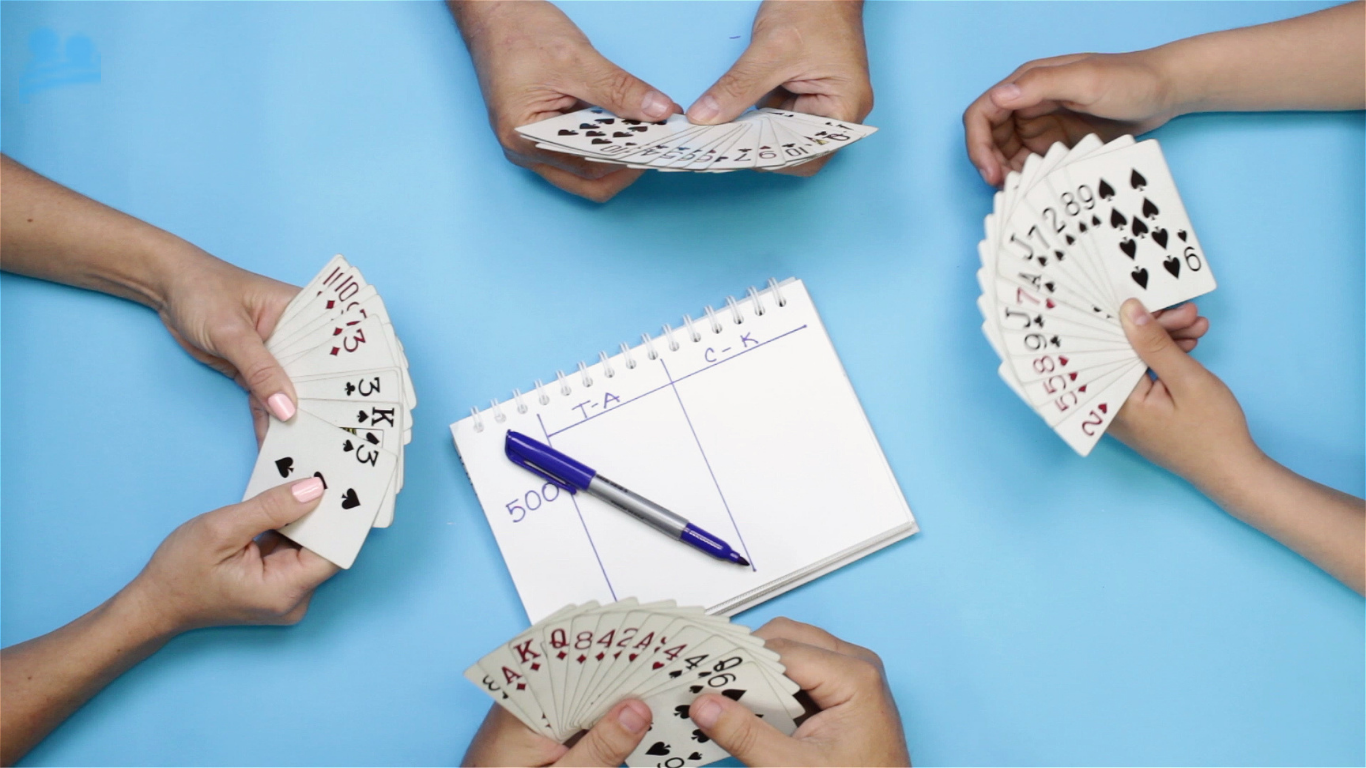
In the quiet tension of a focused card table, there is a specific kind of magic that occurs just after the cards are dealt but before the first lead is made. It is the moment of the bid, a silent calculation of risk, a subtle signal to a partner, and a declaration of intent. This is the world of Spades, a game that has evolved from a mid-century pastime into a profound cultural touchstone. Unlike its cousins in the trick-taking genre, Spades strips away the fluff of shifting trumps and complex bidding languages to offer something purer: a high-stakes psychological battlefield where your most powerful weapon isn’t just an Ace, but your ability to anticipate the future.
To master Spades is to master the art of the social contract. Whether you are navigating the physical camaraderie of a neighborhood tournament or sharpening your edge through a digital interface like https://solitaire.net/spades , you are engaging in a tradition that demands both individual brilliance and seamless cooperation. It is a game where luck provides the raw materials, but planning constructs the victory. In this exploration, we dive into why Spades remains the ultimate social experience built on the pillars of foresight, partnership, and tactical precision.
The Architecture of Strategy: More Than Just Luck
To the uninitiated, Spades might look like any other trick-taking game where the highest card wins. However, the fundamental difference lies in the “spade” suit itself. In this game, Spades are always the trump card. This fixed hierarchy removes the uncertainty found in games like Bridge or Hearts, where the trump suit might change from round to round. By making Spades a permanent powerhouse, the game shifts its focus from the luck of the draw to the precision of the bid.
The bid is the heart of the Spades experience. It is a contract, a promise made to your partner and a challenge issued to your opponents. Before a single card is played, players must assess their hands and predict exactly how many tricks (or “books”) they can win. This requires a sophisticated level of probabilistic thinking. You aren’t just looking at your Aces and Kings; you are looking at your “length” in a suit, your potential to “cut” a lead suit with a trump card, and the likelihood that your partner can cover your weaknesses.
When you bid, you are essentially creating a roadmap for the next thirteen turns. If you bid four, you are claiming that you have the resources to seize control of the table four distinct times. If you overestimate, you risk being “set” losing points for failing to meet your goal. If you underestimate, you accumulate “bags,” which can lead to penalties later. This creates a narrow corridor of success that rewards honest assessment and punishes both hubris and cowardice.
The Partnership Dynamic: A Lesson in Non-Verbal Communication
One of the most compelling aspects of Spades is that it is almost exclusively played in pairs. This creates a unique social vacuum. You and your partner share a score, but you are strictly forbidden from discussing your cards or your intentions once the hand begins. This necessitates a “mind-meld” that only comes through experience, observation, and mutual trust.
In a professional setting, we call this “collaborative planning.” In Spades, it is survival. When your partner bids high, you must decide whether to play conservatively to protect their bid or aggressively to help them reach it. Every card played is a piece of information, a word in a silent conversation. A low lead might signal a “void” in a suit, while a high trump play early on might indicate a desperate attempt to regain control of the board.
This level of engagement makes Spades a premier social experience because it fosters a deep sense of shared responsibility. When a team wins a difficult hand, the triumph is shared equally. When they fail, the post-game analysis (often the most spirited part of the night) becomes a collaborative post-mortem on what went wrong. Did the partner miss a signal? Did the opponent play an unexpected “deuce” of Spades to steal a trick? This feedback loop is what builds long-term bonds between players.
The Digital Renaissance: Bringing Strategy to the Screen
While the smoke-filled rooms of the mid-20th century are largely a thing of the past, the game has found a massive new audience online. The transition to digital play has not stripped the game of its soul; rather, it has polished the experience and made the high-level strategy accessible to everyone. Platforms like https://solitaire.net/spades allow players to engage with the game’s mechanics without the manual labor of shuffling or the administrative burden of manual scorekeeping.
For the modern enthusiast, digital Spades offers an unparalleled training ground. In a physical game, mistakes can be social faux pas that slow down the evening. Online, they are simply data points. The digital environment allows for a significantly faster pace of play, meaning a player can see more hands and experience more varied bidding scenarios in an hour than they could at a weekly neighborhood game.
Furthermore, the digital space has introduced the game to a global audience, allowing a player in New York to partner with someone in London to take on opponents in Tokyo. This global connectivity highlights the universal nature of the game’s logic. The rules of Spades are a universal language, proving that strategic planning and social cooperation are human constants, regardless of geography.
Mastering the Bid: The Art of the Underestimate
A common mistake among novice players is overbidding. In the heat of the moment, an Ace of Hearts looks like a guaranteed win. But in Spades, the “Sandbagging” rule where accumulating ten overtricks (bags) results in a 100-point penalty serves as a brilliant balancing mechanism. It punishes those who are too cautious and rewards those who have a surgical understanding of their hand’s true value.
Strategic planning in Spades involves a concept known as “Value Estimation.” To bid effectively, a player must evaluate three core pillars:
1. The High Cards (Power)
Aces and Kings are your foundation. However, they are not invincible. A King of Diamonds is only a winner if the person playing after you doesn’t have a Diamond and chooses to trump it with a Spade. Therefore, “power” is relative to the position you hold at the table.
2. Trump Length (Control)
Having five or more Spades, even low ones, allows you to dictate the flow of the game. If you have “length” in Spades, you can exhaust your opponents’ trump cards, eventually making your low cards in other suits winners. This is the “long game” of Spades.
3. The Void (Opportunity)
Having no cards in a specific suit is often more valuable than having a King. This is known as a “void.” It allows you to “slough” a useless card (getting rid of a potential bag) or play a trump card to steal a trick that the opponents thought was theirs.
By integrating these factors, a player moves from simply “playing cards” to “managing a portfolio of risks.” This is the hallmark of a high-level Spades player: the ability to see the end of the round before the first card hits the table.
Going for Broke: The High-Stakes World of “Nil”
No discussion of Spades is complete without mentioning the “Nil” bid. When a player bids Nil, they are claiming they will not win a single trick. If successful, the team receives a massive bonus (usually 100 points). If they fail and win even one trick, they are penalized the same amount.
The Nil bid transforms Spades into an entirely different game. Suddenly, the goal isn’t to be strong, but to be invisible. It requires the Nil-bidder to play with extreme caution, and it requires their partner to play “The Protector.” The partner must now win every trick that the Nil-bidder might accidentally take. This dynamic is the ultimate test of partnership. It is a high-wire act that requires total synchronization and a willingness to sacrifice one’s own high cards to shield a partner’s vulnerability.
The Psychological Game: Setting the Opponents
While winning your bid is the primary goal, the true joy of Spades for many lies in “setting” the other team. To set an opponent is to prevent them from reaching their bid, resulting in a heavy point penalty (the amount of their bid multiplied by ten). This is where the social and competitive nature of the game truly shines.
To successfully set an opponent, you must engage in “Defensive Spades.” This involves:
- Counting Cards: Keeping a mental tally of which high cards and trumps have been played. If you know the Ace of Spades is gone, your King becomes the most powerful card in the game.
- Force-Playing: Leading a suit that you suspect an opponent is short in, forcing them to use their trump cards early so they don’t have them for later, more critical tricks.
- Leading Through Strength: If you know the player to your left has a strong hand, leading high cards forces them to either play their winners early or lose the trick entirely.
This competitive friction is what keeps players coming back. It’s a mental tug-of-war where the lead can change in a single hand, keeping the stakes high until the very last card is played. It turns a simple card game into a theater of the mind.
Why Spades Endures: Practical Takeaways for Life
The skills required to excel at Spades planning, partnership, risk assessment, and adaptability are the same skills required for success in the professional world and personal relationships.
- Objective-Based Planning: You cannot win in Spades (or in business) without a clear objective. The bid is your “Key Performance Indicator” (KPI). It forces you to look at your resources and commit to a result.
- The Power of Adaptability: Even the best-laid plans can go awry if the cards fall unfavorably. Learning to pivot mid-hand, turning a defensive strategy into an offensive one, is a vital life skill.
- Active Listening (Non-Verbal): Learning to read the subtle “signals” of a partner teaches empathy and observational awareness. It reminds us that communication is more about what is done than what is said.
- Resilience Under Pressure: When you are “down a set,” the temptation is to play recklessly. Spades teaches you to maintain your composure, stick to the logic of the game, and claw your way back one trick at a time.
The Evolution of the Social Experience
Historically, Spades has been a game of the community. It flourished in the African American community in the mid-20th century, becoming a staple of family reunions and social clubs. It was a game passed down through generations, often accompanied by “trash talk” that was as much a part of the game as the cards themselves.
Today, that social experience has broadened. Whether you are playing a physical deck at a bar or joining a room on solitaire.net/spades, you are stepping into a space that rewards intellect over impulse. The “social” aspect isn’t just about talking; it’s about the shared intellectual journey of the round. It’s about the “Good game” typed into a chat box or the high-five shared across a table after a successful Nil bid.
Conclusion: The Timeless Appeal of the Deck
Spades is more than a game; it is a masterclass in social strategy. It rewards the disciplined, challenges the arrogant, and provides a framework for meaningful human interaction. It is one of the few games where you can be dealt a “bad” hand and still win through superior planning and partnership.
In an era of increasingly solitary digital entertainment and short attention spans, Spades stands as a defiant reminder of the value of deep focus and shared goals. It proves that with a little bit of foresight, a solid partner, and the right timing for your trump cards, you can navigate even the most unpredictable challenges.
The deck is shuffled. The cards are dealt. The table is waiting. Whether you are a veteran of a thousand games or a newcomer looking to test your strategic mettle, the world of Spades offers a depth of experience that few other pastimes can match. It is time to place your bid.


