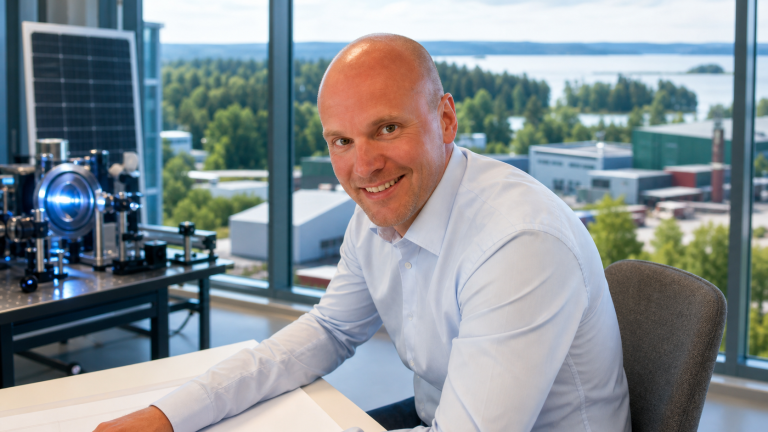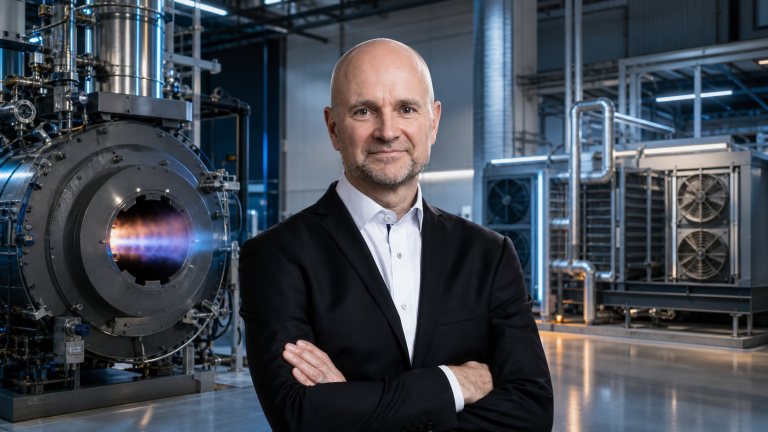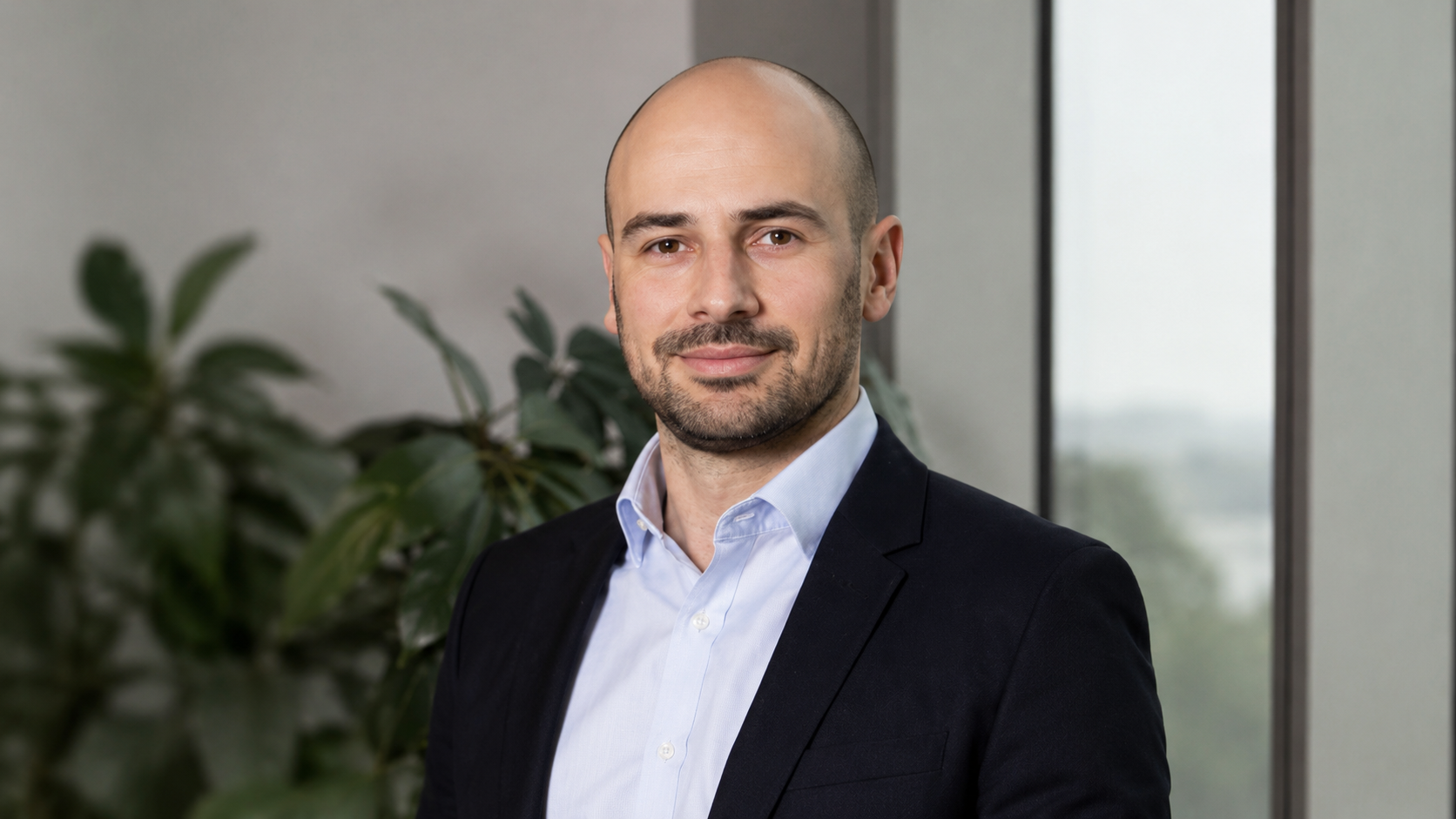
Drug development rarely rewards impatience, yet mental-health markets have become painfully impatient. Patients with depression, PTSD, addiction, and neurodegenerative disease are still waiting for treatments that work faster, last longer, and avoid the burdens that come with many existing therapies. That tension sits at the center of Georgios Trichas Kasvu Therapeutics, a story about a Finnish biotech trying to turn neuroplasticity into a practical drug-development path.
Kasvu Therapeutics is a Helsinki-based preclinical biotech developing small-molecule neuroplastogens designed to enhance neuronal connectivity without hallucinations. Public company materials describe its work around TrkB receptor biology, structure-based drug design, and AI-supported modeling. For Georgios Trichas, listed publicly as Chief Business Officer rather than CEO, the commercial challenge is not simply selling a molecule; it is translating a difficult scientific thesis into a company investors, partners, and clinicians can understand.
The Problem Kasvu Therapeutics Was Really Solving
The problem Kasvu Therapeutics is addressing is not a lack of psychiatric drugs. It is the gap between clinical need and what many treatments actually deliver for patients who need durable improvement. Conventional approaches can be slow, inconsistent, or difficult to tolerate, while psychedelic-based research has created excitement alongside practical concerns about hallucinations, supervision, regulation, and patient access.
Kasvu’s thesis focuses on neuroplasticity, the brain’s ability to adapt and rebuild connections. Innovestor has described the company as a University of Helsinki spinout developing neuroplasticity enhancers for conditions including PTSD, addiction, and depression. That market gap is unusually demanding because success requires more than scientific novelty. A company must prove that a biological mechanism can become a medicine that is safe, scalable, and clinically useful.
Why Georgios Trichas Saw the Industry Differently
Georgios Trichas brings a background that appears shaped by both science and business development, which matters in a field where the best molecule does not automatically become the best company. His public profile connects him with Kasvu as Chief Business Officer and describes the company as developing neuroplastogens for neuropsychiatric and neurodegenerative disorders. That role places him at the point where laboratory claims meet partner diligence, financing pressure, and market skepticism.
What makes the Kasvu approach interesting is its refusal to treat hallucination as an unavoidable trade-off. The company’s public materials emphasize rapid-acting and long-lasting neuroplastogens “without hallucinations,” positioning the business around a cleaner therapeutic experience. For Trichas, that distinction matters commercially because it speaks to adoption, not just invention. A drug that fits existing healthcare systems has a different future from one that requires an entirely new care model.
What Made Georgios Trichas Different From Competitors
The competitive edge for Kasvu Therapeutics is less about claiming to be first and more about being precise. Its public site points to a proprietary 3D model of the TrkB receptor and structure-based drug design to identify selective positive allosteric modulators. That suggests a strategy built around target discipline rather than broad enthusiasm for neuroplasticity as a trend.
Georgios Trichas has to turn that discipline into trust. In biotech, trust is built through evidence, repeatable methods, credible partners, and the ability to explain risk without hiding it. The market has seen enough overpromised science to be cautious. Kasvu’s challenge is to show that its platform can produce assets that survive the long road from preclinical promise to clinical proof.
The Decision That Changed Kasvu Therapeutics
The defining decision for Kasvu Therapeutics appears to be its focus on non-hallucinogenic neuroplastogens rather than following the full psychedelic-treatment model. That choice narrows the company’s scientific path but broadens its potential commercial fit. It also forces the team to answer a hard question: can the benefits associated with neuroplasticity be separated from the subjective effects that made psychedelics famous?
For Georgios Trichas, that decision changes the business conversation. Instead of pitching a cultural movement around psychedelic therapy, Kasvu can argue for drug-like practicality: small molecules, defined mechanisms, and potential compatibility with conventional medical settings. The risk is that the science must do more work because the story cannot lean on public fascination alone. The upside is a company positioned for serious pharmaceutical partnership if the data holds.
Turning Mission Into Operations
Kasvu Therapeutics cannot operate like a wellness brand borrowing language from neuroscience. It has to behave like a drug developer, which means disciplined experiments, defensible intellectual property, careful hiring, and a development plan that anticipates regulators and strategic partners. Its small size, listed publicly as a privately held Helsinki biotech, suggests a focused team rather than a sprawling organization.
That operational reality gives Georgios Trichas an important role. Business development in preclinical biotech is not only about fundraising or partnerships; it is about sequencing credibility. The company must decide which data to generate first, which indications to prioritize, and how much platform ambition to reveal before a lead program is mature. Those choices can determine whether Kasvu is viewed as a promising science project or a serious therapeutic company.
The Difficult Reality of Scaling
Scaling Kasvu Therapeutics will be difficult because neuroscience drug development has a long history of disappointment. Brain disorders are biologically complex, clinical endpoints can be hard to interpret, and investor patience can shift quickly when markets tighten. Even strong preclinical logic can fail in humans, which is why the company’s next stages will matter far more than its positioning.
The pressure on Georgios Trichas is also commercial. He has to help build belief without overstating certainty, especially in a sector where hope is both necessary and dangerous. Competitors exploring psychedelics, neuroplasticity, and new psychiatric mechanisms will continue to compete for capital and attention. Kasvu’s advantage will depend on whether it can convert its TrkB-centered platform into data that answers skeptical questions plainly.
What Georgios Trichas’s Story Actually Reveals
The larger lesson in Georgios Trichas Kasvu Therapeutics is that modern biotech companies are no longer built on science alone. They are built on the ability to translate science into systems: investor logic, clinical pathways, partner confidence, and patient relevance. A company can have an elegant mechanism and still fail if it cannot make the market understand why that mechanism matters.
Kasvu’s story is still early, and that matters. The company has not yet earned the right to be judged like a mature pharmaceutical business, but it has chosen a problem large enough to test every part of its model. Georgios Trichas Kasvu Therapeutics now sits in the difficult middle ground between scientific possibility and commercial proof. That is where many biotech stories become real.