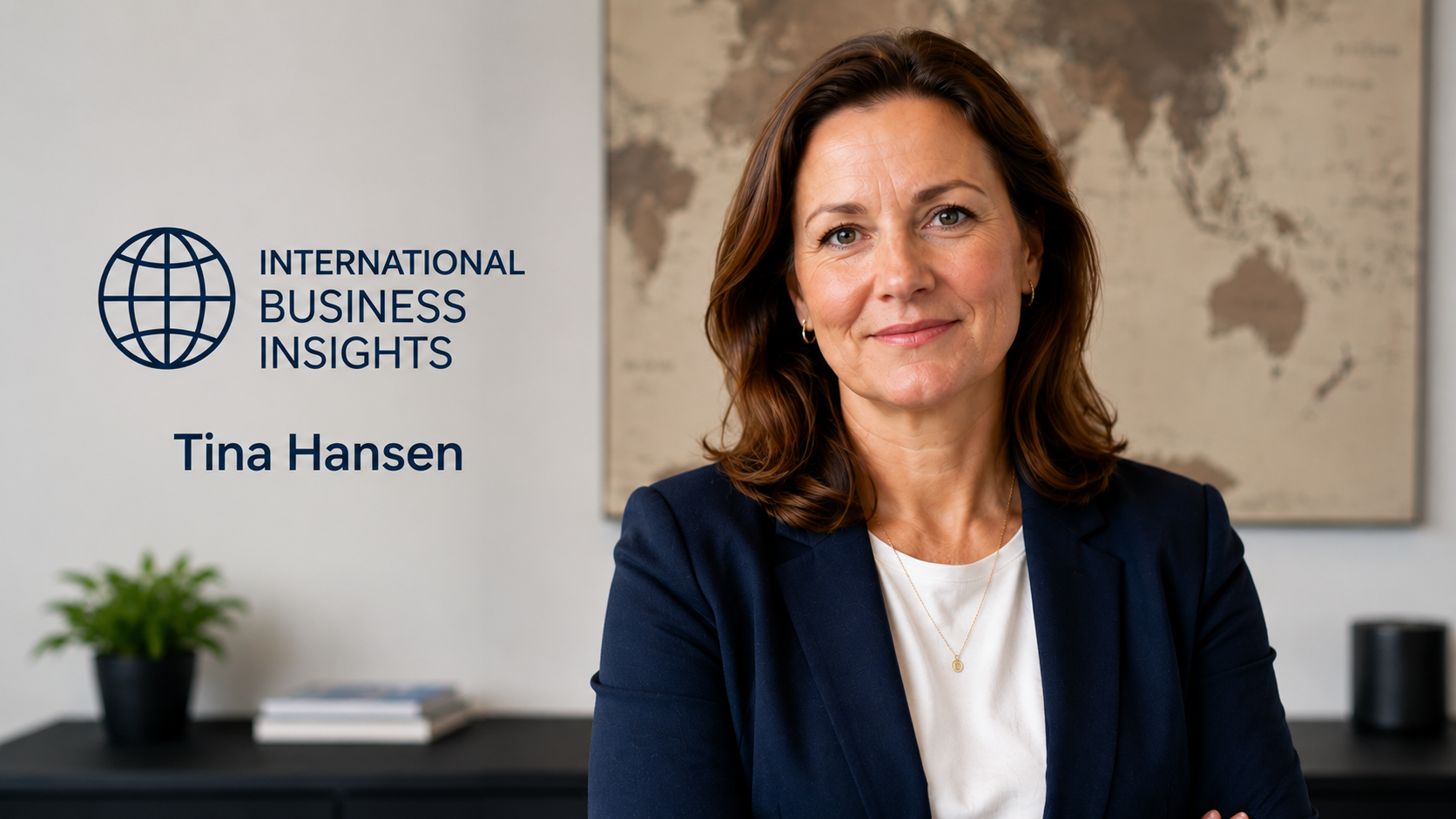
Global business advice often sounds confident from a distance. But inside real companies, international expansion is rarely clean, predictable, or linear. Markets behave differently. Customers respond differently. Even successful strategies can fail when transferred across borders without context.
That complexity shaped part of Tina Hansen’s work through International Business Insights.
Rather than treating international growth as a formula, Hansen positioned the company around helping businesses navigate uncertainty with sharper strategic understanding. The approach reflected a broader reality many companies eventually discover: expansion is not just about entering new markets. It is about interpreting them correctly.
The rise of Tina Hansen International Business Insights mirrors growing demand for advisory firms capable of translating global complexity into practical business decisions.
The Problem International Business Insights Was Really Solving
Many companies underestimate how operationally difficult international growth becomes after the initial excitement fades.
Market entry strategies often look convincing on paper but collapse against cultural differences, regulatory complications, supply chain pressures, or customer behavior shifts. Businesses spend heavily on expansion without fully understanding local realities.
International Business Insights appeared focused on reducing that gap between ambition and execution.
The company’s value was not simply providing information about foreign markets. Businesses already had access to data. What they needed was interpretation — understanding what mattered operationally and strategically before committing resources.
That distinction became increasingly important as globalization grew more unpredictable.
Why Tina Hansen Saw the Industry Differently
Many advisory firms treat international business as a scale problem. Tina Hansen appeared to view it more as a context problem.
That perspective changes everything.
Global markets are shaped by nuance: local trust dynamics, communication expectations, regulatory environments, pricing psychology, and operational behavior. Companies that ignore those subtleties often mistake visibility for traction.
Hansen’s approach reflected a more grounded understanding of expansion. Businesses do not succeed internationally because they replicate existing systems perfectly. They succeed because they adapt intelligently without losing operational coherence.
That requires patience.
And patience is increasingly rare in modern growth culture.
What Made Tina Hansen Different From Competitors
The consulting and international strategy space often rewards broad promises. Firms advertise access to global opportunity while overlooking how messy expansion actually becomes.
Tina Hansen differentiated by emphasizing realism over spectacle.
Rather than presenting international growth as universally scalable, International Business Insights appeared focused on helping companies understand risk, operational readiness, and market alignment before accelerating expansion plans.
Clients increasingly value that honesty.
Executives today operate under intense pressure to grow quickly while controlling costs and minimizing mistakes. Advisory firms that acknowledge operational friction often earn stronger trust than firms selling certainty.
That trust became part of the company’s positioning.
The Decision That Changed International Business Insights
One important strategic decision appears to have been prioritizing strategic depth instead of broad market generalization.
Many firms attempt to cover every geography and industry simultaneously. While that creates visibility, it often weakens practical expertise.
Tina Hansen instead positioned International Business Insights around focused interpretation and practical strategic guidance. That decision likely limited superficial scale opportunities but strengthened long-term credibility.
In advisory businesses, clarity often matters more than breadth.
The companies that survive tend to know exactly what problems they solve.
Turning Mission Into Operations
International consulting requires more than market knowledge. Operational execution determines whether strategy becomes usable inside client organizations.
For International Business Insights, operational discipline likely involved translating complex international realities into practical decision-making frameworks businesses could actually implement.
That includes communication structures, research methodology, local market understanding, and strategic alignment between leadership teams.
Companies expanding internationally also face growing scrutiny around sustainability, supply chains, labor practices, and regulatory compliance. Advisory firms now operate inside a far more demanding environment than they did a decade ago.
Clients expect precision.
And they expect accountability.
The Difficult Reality of Scaling
Scaling advisory firms creates its own contradictions.
As International Business Insights expanded, maintaining consistency across client engagements likely became more difficult. International strategy work depends heavily on interpretation, judgment, and local awareness — areas that are difficult to standardize fully.
Competition also intensified.
Businesses today can access international data instantly, reducing the perceived value of generic advisory services. Consulting firms must therefore provide deeper insight, stronger contextual understanding, and clearer operational relevance.
That raises pressure internally.
For founders like Tina Hansen, scaling becomes less about visibility and more about protecting analytical quality while adapting to shifting market expectations.
That balancing act rarely receives attention publicly.
But it defines whether advisory firms remain credible over time.
What Tina Hansen’s Story Actually Reveals
The growth of Tina Hansen International Business Insights reflects a broader shift happening across global business itself. Companies are realizing that expansion is no longer simply about entering more markets. It is about understanding complexity without becoming overwhelmed by it.
That changes the role of advisory firms.
The most valuable consultants today may not be the loudest voices in the room. They may be the ones helping businesses slow down long enough to make better decisions.
Hansen’s approach suggests that clarity, restraint, and contextual thinking are becoming competitive advantages in uncertain markets.
And in international business, uncertainty is rarely temporary.