
Water infrastructure rarely attracts public attention until something fails. A contamination issue. A drought. Aging pipelines. Rising industrial demand colliding with environmental pressure.
For decades, much of the sector operated quietly in the background, treated more as utility management than innovation territory. That assumption has started to collapse.
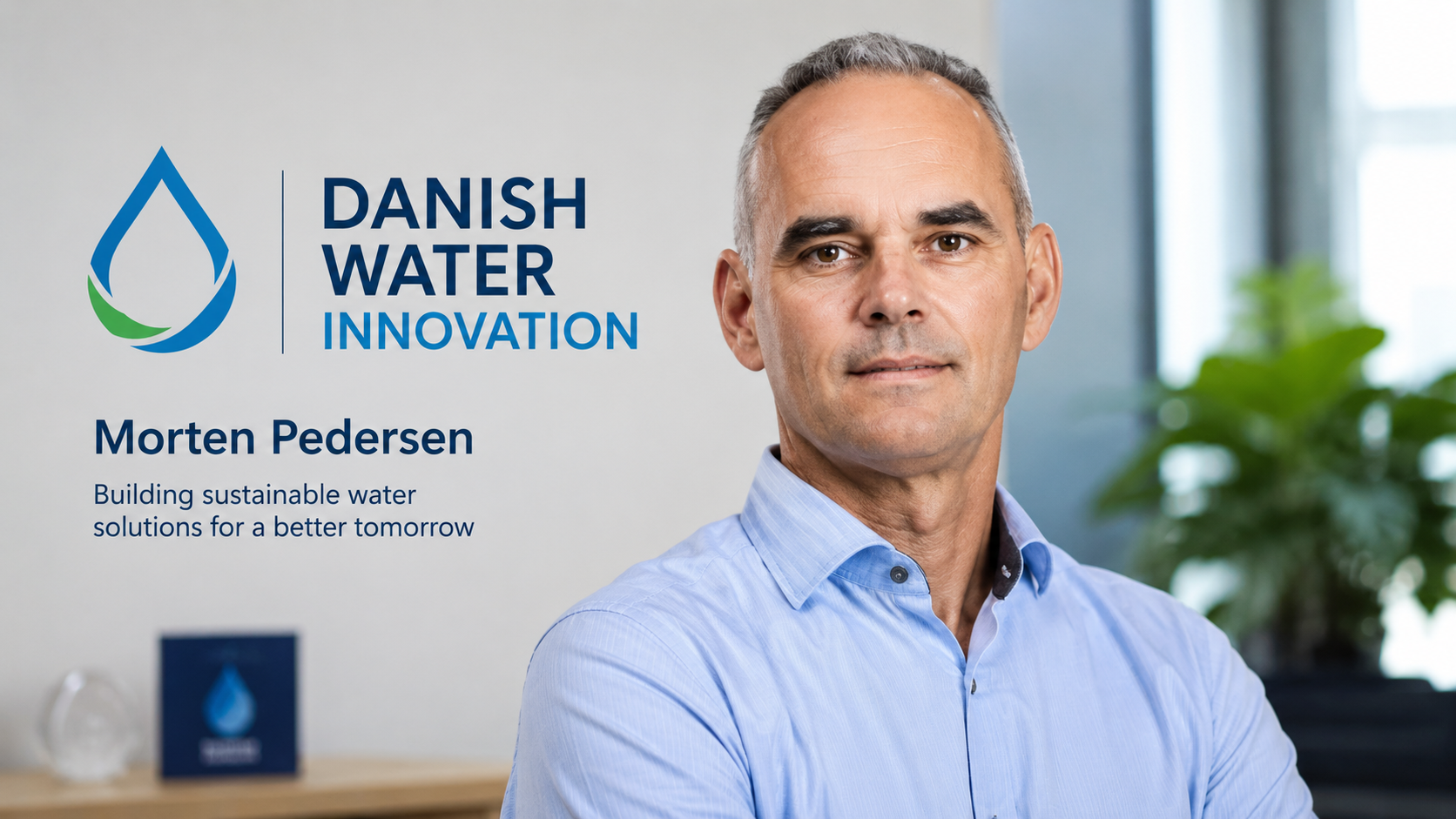
The shift created an opening for companies like Danish Water Innovation, led by Morten Pedersen, who approached water technology not simply as an engineering problem, but as a long-term operational challenge affecting governments, industries, and urban development simultaneously.
The story behind Morten Pedersen Danish Water Innovation reflects a broader business reality: some of the most important industries are also the least visible.
Until pressure forces change.
The Problem Danish Water Innovation Was Really Solving
Water systems across Europe face mounting strain. Population growth, industrial expansion, climate pressure, and aging infrastructure have exposed weaknesses many municipalities ignored for years.
The problem is not just scarcity.
It is inefficiency.
Large amounts of treated water are lost through outdated infrastructure, poorly optimized systems, and delayed modernization efforts. Industrial operations also face growing pressure to reduce waste while maintaining production stability and regulatory compliance.
That created a difficult gap in the market.
Organizations needed practical water solutions capable of balancing sustainability with operational reliability — without creating unrealistic implementation costs.
Danish Water Innovation entered that environment with a focus on applied solutions rather than theoretical sustainability branding. The company’s positioning appeared grounded in improving how water systems function operationally, particularly where efficiency and environmental responsibility intersect.
That distinction mattered because many clients were already exhausted by abstract climate messaging disconnected from infrastructure realities.
Pedersen seemed to understand that practical adoption would matter more than ambitious rhetoric.
Why Morten Pedersen Saw the Industry Differently
Infrastructure businesses often move slowly because the consequences of failure are enormous. Water systems especially demand caution, reliability, and long planning cycles.
Morten Pedersen appeared to recognize that innovation inside this sector would require credibility first and visibility second.
That mindset shaped how Danish Water Innovation positioned itself.
Rather than presenting sustainability as a branding exercise, the company approached it through operational improvement. Better efficiency. Better system performance. Better long-term resilience.
The thinking was pragmatic.
Many environmental businesses struggle because they frame sustainability as a moral argument while ignoring operational realities clients face daily. Municipalities and industrial operators still need systems that remain financially viable, technically dependable, and scalable over time.
Pedersen’s approach reflected a more grounded understanding: environmental progress only scales when implementation becomes realistic.
Not symbolic.
What Made Morten Pedersen Different From Competitors
The water technology sector contains a mix of legacy engineering firms, environmental startups, and public-sector contractors. Many compete heavily on technical specifications while overlooking communication, adaptability, and long-term client relationships.
Morten Pedersen differentiated by positioning Danish Water Innovation closer to practical partnership than pure technology sales.
That difference is subtle but important.
Infrastructure clients rarely make decisions based solely on innovation claims. They prioritize trust, reliability, and implementation confidence. Water systems cannot afford unnecessary risk.
This changes how companies build credibility.
Instead of relying on exaggerated promises, Danish Water Innovation appeared focused on operational clarity — helping customers understand not just what technology could do, but how it would function within existing systems and constraints.
That approach likely strengthened trust over time.
Especially in industries where caution is rational.
The Decision That Changed Danish Water Innovation
One defining strategic decision appears to have been focusing on scalable sustainability rather than niche experimentation.
Many environmental technology firms chase visibility through ambitious concepts that remain difficult to deploy widely. While those projects attract attention, they often struggle commercially because implementation costs or operational complexity limit adoption.
Morten Pedersen instead positioned the company around solutions clients could realistically integrate into existing infrastructure environments.
That decision mattered.
It suggested the business prioritized durability over spectacle. Instead of selling idealized future systems, Danish Water Innovation concentrated on helping organizations improve current operations incrementally and effectively.
In infrastructure sectors, practical progress often beats dramatic reinvention.
Even if it attracts less publicity.
Turning Mission Into Operations
Sustainability becomes meaningless if operational systems cannot support it consistently.
For Danish Water Innovation, operational credibility likely depended on translating environmental priorities into measurable infrastructure outcomes. That includes system optimization, efficiency management, maintenance reliability, and implementation support.
Water technology businesses also operate under unusually high accountability standards. Failures can create environmental damage, public backlash, regulatory consequences, and financial disruption simultaneously.
That pressure affects everything internally.
Hiring decisions require technical depth alongside communication skills. Supply chains must remain stable. Engineering teams need precision under regulatory constraints. Long-term service reliability becomes part of the brand itself.
The operational side of infrastructure businesses is often invisible to outsiders.
But it determines survival.
Pedersen’s leadership approach appears tied closely to understanding that sustainable systems only matter if they remain usable under real-world conditions.
The Difficult Reality of Scaling
Scaling infrastructure-focused businesses is fundamentally different from scaling software companies or digital platforms.
Growth is slower. Projects are larger. Trust cycles take longer.
For Danish Water Innovation, expansion likely introduced familiar pressures: balancing innovation with reliability, navigating public-sector procurement processes, managing technical complexity, and competing against established industry players with deeper historical networks.
The water sector is also becoming more politically sensitive.
Climate concerns, energy usage, and environmental regulation increasingly shape investment decisions. Companies operating in this space face rising expectations not only around performance, but also transparency and accountability.
At the same time, customers expect affordability.
That tension creates difficult trade-offs for companies trying to scale responsibly. Move too cautiously, and innovation slows. Move too aggressively, and reliability risks increase.
For leaders like Morten Pedersen, scaling becomes less about visibility and more about maintaining technical trust while adapting to rapidly changing environmental demands.
That balancing act rarely makes headlines.
But it defines whether infrastructure companies endure.
What Morten Pedersen’s Story Actually Reveals
The rise of Morten Pedersen Danish Water Innovation reflects a broader shift happening across industrial markets. Sustainability is no longer treated as a separate initiative operating beside business strategy.
It is becoming operational strategy itself.
That changes which companies matter.
Businesses capable of improving efficiency, reliability, and environmental performance simultaneously are increasingly positioned at the center of long-term infrastructure planning. The future of industrial innovation may depend less on dramatic invention and more on making essential systems function better under pressure.
Pedersen’s approach suggests a leadership style grounded in practicality rather than spectacle.
And in industries responsible for foundational infrastructure, practicality may ultimately be the more important form of innovation.

