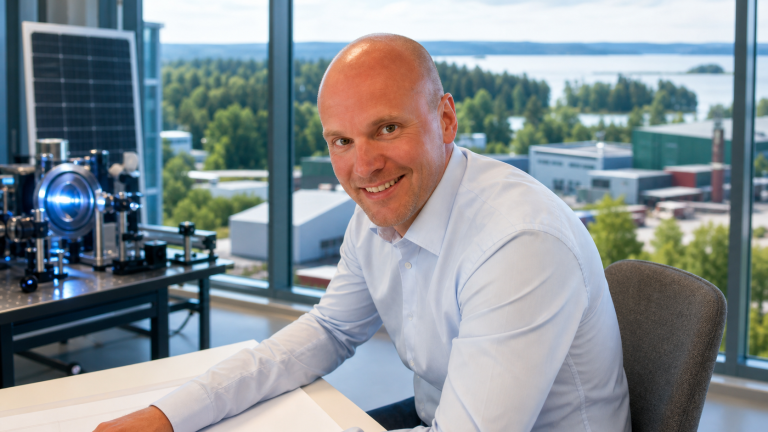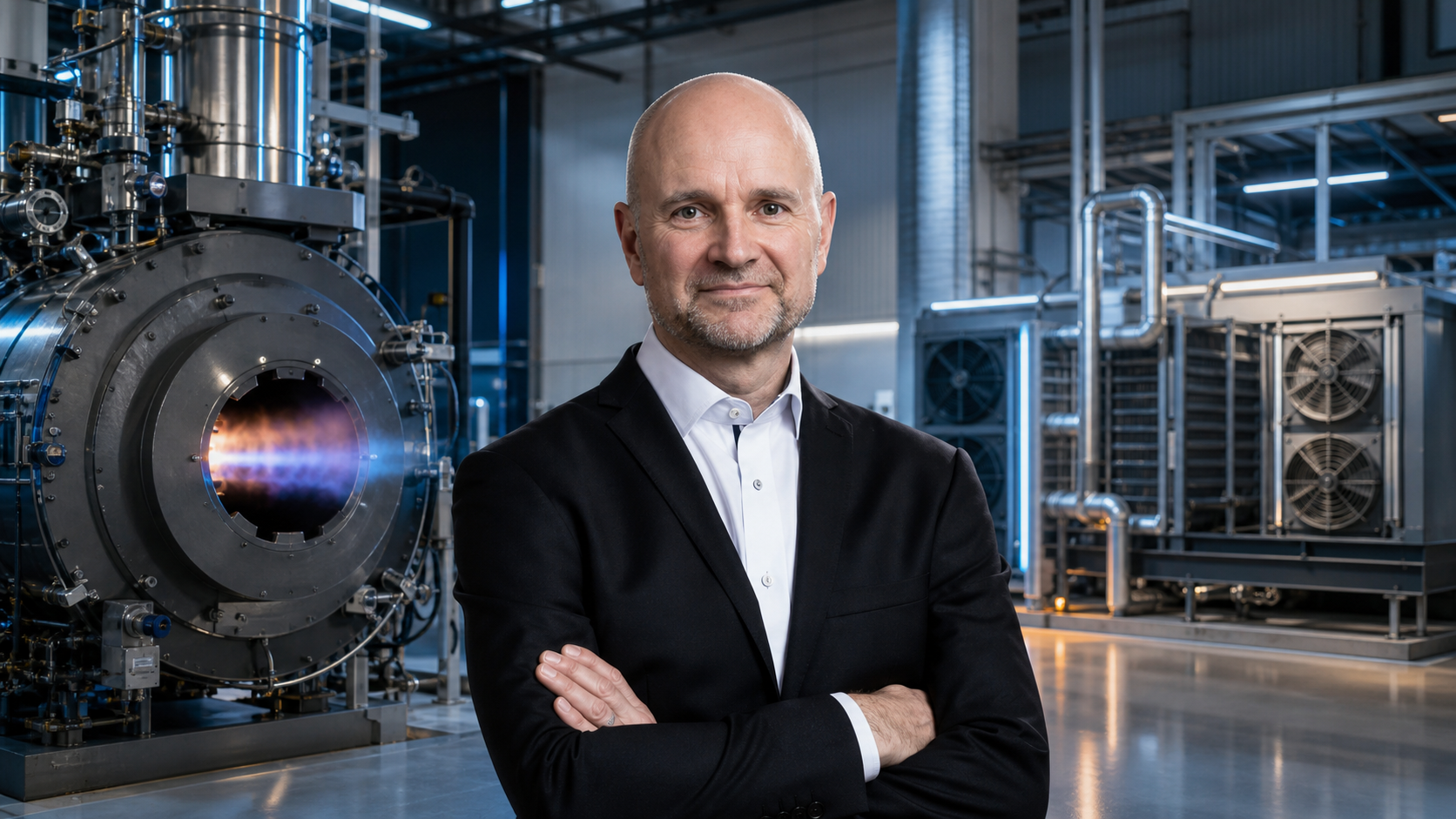
Industrial companies cannot replace their heating infrastructure simply because cleaner technology exists. Production schedules, energy costs, regulations, equipment life cycles, and uncertain fuel availability make every investment decision complicated. Manufacturers want to reduce emissions, but they also need systems that can operate reliably for decades. Olli Tevä and Oilon are working inside that tension, where environmental progress must also make commercial and operational sense.
Tevä joined Oilon in September 2024 as Chief Business Officer for its burner division before becoming Chief Commercial Officer in August 2025. His responsibility now extends across the company’s centralized sales and marketing operations. The appointment brought together two important parts of Oilon’s business: low-emission combustion technology and industrial heat pumps. Tevä’s challenge is to turn the company’s engineering capabilities into solutions that global customers can confidently adopt.
The Problem Oilon Was Really Solving
Industrial heating remains one of the more difficult areas of the energy transition. Factories, power plants, district-heating networks, and processing facilities require dependable high-temperature energy, often around the clock. Electrification can reduce emissions in many applications, but it is not always technically or financially practical. Oilon addresses this problem through industrial heat pumps, low-emission burners, and systems capable of working with several energy sources.
The company’s heat pumps allow customers to recover energy that would otherwise be wasted. Low-temperature heat from industrial processes can be captured and reused for heating, cooling, or district-energy production. In suitable applications, combined heating and cooling can produce several units of usable energy for each unit of electricity consumed. This creates a business case based on lower operating costs as well as reduced emissions.
Oilon’s burner business solves a different part of the same challenge. Many industrial facilities will continue using combustion systems while transitioning toward cleaner fuels or waiting for suitable electrification options. These customers need burners capable of meeting stricter emission limits without forcing the premature replacement of entire heating systems. By developing equipment for conventional, renewable, and emerging fuels, Oilon helps customers reduce emissions while preserving operational flexibility.
Why Olli Tevä Saw the Industry Differently
Olli Tevä is an engineer by education, holding a Master of Science in power electronics, but his career has largely focused on international commercial leadership. Before joining Oilon, he held senior sales and executive positions at companies including Ensto, Danfoss, Vacon, and Exel Composites. These roles exposed him to industries where customers evaluate technology through performance, reliability, and lifetime cost. Technical superiority matters, but it produces limited value unless buyers understand how it addresses their specific risks.
Tevä’s perspective is particularly relevant because the energy transition does not follow one uniform path. A food-processing facility, district-heating operator, marine customer, and heavy industrial plant may face entirely different energy constraints. Promoting one technology as the universal answer can therefore weaken credibility. The Olli Tevä Oilon approach instead emphasizes a portfolio capable of supporting multiple routes toward lower emissions.
This view also treats commercial strategy as part of engineering implementation. Customers adopting industrial energy technology need feasibility assessments, system design, commissioning, service, and long-term support. Their purchasing decisions involve operations teams, finance departments, engineering consultants, and regulators. Tevä’s role requires aligning Oilon’s commercial processes with that complex decision-making environment.
What Made Olli Tevä Different From Competitors
Energy-technology companies frequently organize sales around separate product divisions. This can provide specialist expertise, but it may also encourage teams to promote individual technologies instead of addressing the customer’s complete energy problem. Olli Tevä became Chief Commercial Officer when Oilon centralized its sales and marketing leadership across the burner and industrial heat-pump businesses. The change creates an opportunity to present combustion, electrification, and energy recovery as complementary options.
Oilon’s family-owned structure also influences its market position. Founded in 1961, the company has developed technology for customers whose equipment must remain productive for many years. That history supports a long-term approach to product development, service, and customer relationships. Tevä must translate those strengths into a clear commercial advantage when competing against larger international manufacturers.
The company’s combination of specialized engineering and international reach is another differentiator. Oilon has manufacturing operations in Finland, China, and the United States, with products serving demanding industrial applications across several markets. Local regulations and energy economics vary considerably, making regional knowledge essential. A centralized commercial strategy must improve consistency without ignoring the practical differences between customer markets.
The Decision That Changed Oilon
The decision to create a centralized Chief Commercial Officer position marked an important shift for Oilon. Previously, its burner and industrial heat-pump businesses had separate commercial leadership within the management team. In August 2025, the company removed those separate positions and appointed Tevä to lead unified sales and marketing operations. The stated objective was to simplify the organization, strengthen competitiveness, and support the company’s long-term strategy.
The change mattered because the technologies increasingly serve overlapping customer needs. An industrial business considering lower-carbon heating may benefit from waste-heat recovery, electrification, cleaner combustion, or a carefully designed combination of these solutions. Separate commercial teams could make that conversation more complicated or create internal competition between product categories. Unified leadership offers the possibility of beginning with the customer’s energy challenge rather than a predetermined product.
Centralization also introduces risks. Burner and heat-pump customers may have different buying processes, technical expectations, and industry relationships. A simplified management structure must preserve specialist knowledge while reducing unnecessary separation. Tevä’s effectiveness will depend on whether unified commercial processes improve customer decisions without making the organization less responsive.
Turning Mission Into Operations
For Oilon, sustainability becomes meaningful through measurable equipment performance. Its industrial heat pumps can recover waste energy, support district heating, and produce simultaneous heating and cooling. The company has reported cases where heat-pump solutions helped process-industry customers achieve major reductions in carbon dioxide emissions. These outcomes depend on accurate system sizing, installation quality, monitoring, and continued technical service.
The burner division faces a similarly practical test. Oilon has developed low-NOx combustion systems intended to help industrial operators meet tightening emission requirements. In a German reverse-flame-boiler installation, a new burner achieved a significant reduction in nitrogen oxide emissions, demonstrating how equipment modernization can improve existing infrastructure. Tevä’s commercial organization must help customers understand where such upgrades provide credible technical and financial returns.
Oilon also continues exploring future energy pathways involving hydrogen and oxy-fuel combustion. Hydrogen can provide energy storage for variable renewable electricity, while oxygen created during electrolysis may support cleaner industrial combustion processes. These possibilities remain dependent on infrastructure, availability, and cost. Commercial leadership must therefore communicate their potential without presenting uncertain future markets as immediate solutions.
The Difficult Reality of Scaling
The green transition creates opportunity, but it does not guarantee predictable demand or easy profitability. Industrial customers may delay investments when energy prices, regulations, or economic conditions remain uncertain. Large projects involve extended sales cycles, technical testing, and negotiations that can consume resources before generating revenue. Oilon must continue investing in technology while maintaining financial discipline during uneven market conditions.
The company confronted these pressures directly in 2025. Oilon considered discontinuing its real-estate heat-pump business to focus resources on industrial heat pumps and burners, where it saw stronger capabilities and growth potential. Later that year, it initiated restructuring measures intended to improve profitability and competitiveness in a challenging market environment. These decisions show that participating in the energy transition still requires difficult choices about where a company can compete sustainably.
Tevävä’s centralized commercial role sits close to those choices. Sales strategy must prioritize markets where Oilon’s technology offers clear value and where the organization can support customers effectively. Expanding into every promising market could stretch specialist resources and weaken service quality. The more disciplined path may involve rejecting attractive but poorly aligned opportunities.
What Olli Tevä’s Story Actually Reveals
The work of Olli Tevä reveals that decarbonizing industry is not only an engineering challenge. It is also a commercial problem involving investment timing, risk assessment, regulatory uncertainty, and the ability to explain complex systems clearly. Customers need technology providers that can compare several energy pathways without forcing every facility toward the same solution. Commercial leadership becomes valuable when it helps organizations make technically credible decisions under uncertainty.
The Olli Tevä Oilon story also shows why energy-transition companies must manage their own transformation while helping customers manage theirs. Oilon is simplifying operations, concentrating resources, and unifying its commercial organization as its markets change. The company’s long history provides technical depth, but history alone cannot determine its next direction. Tevä’s task is to connect that engineering legacy with the customers and energy systems still taking shape.