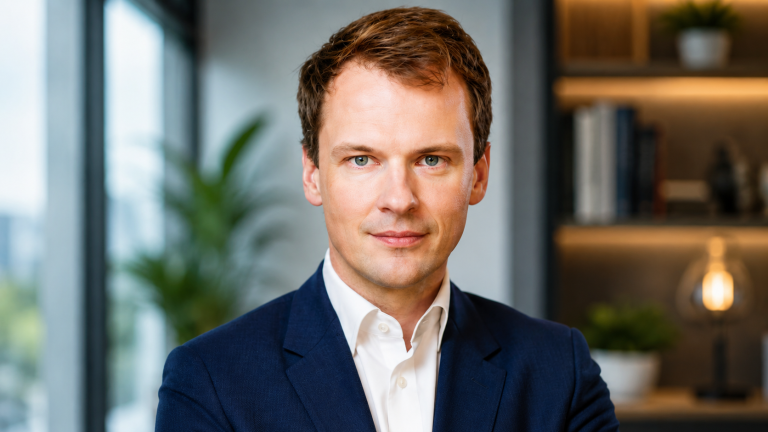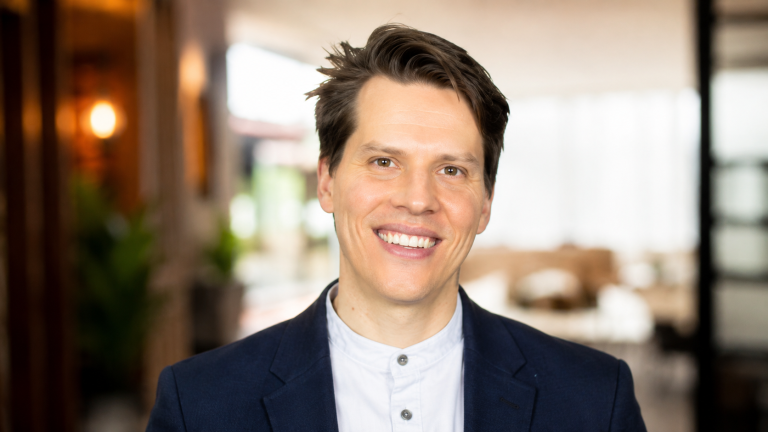
Beauty companies often struggle with the same contradiction: the larger they become, the less personal they feel. Expansion creates efficiencies, stronger distribution, and broader visibility, but it can also flatten the emotional connection customers originally responded to. That tension becomes even more complicated inside professional beauty, where relationships, trust, and identity shape purchasing decisions as much as product quality does. It is a challenge Andy Johnsson has had to navigate while building ICE Beauty Group.
Rather than positioning the company around trend-driven marketing alone, Johnsson appears to have focused on building a scalable beauty platform capable of supporting both operational growth and brand distinctiveness. That distinction matters because many beauty groups become collections of disconnected products chasing short-term demand. ICE Beauty Group instead reflects a more deliberate attempt to balance commercial structure with customer relevance across a competitive and highly fragmented market.
The Problem ICE Beauty Group Was Really Solving
The core issue ICE Beauty Group addressed was fragmentation across the beauty supply and professional salon market. Salons, retailers, and beauty professionals often faced inconsistent product sourcing, shifting consumer trends, and increasing pressure to compete against larger international players. Smaller operators needed reliable partners capable of delivering both quality products and operational consistency.
At the same time, the broader beauty market was becoming increasingly crowded. New brands entered constantly, social media accelerated trend cycles, and customer loyalty became harder to maintain. Beauty businesses were no longer competing only on product performance. They were competing on speed, visibility, distribution, education, and customer trust simultaneously. Andy Johnsson recognized that scale itself could become an advantage if managed carefully.
ICE Beauty Group also addressed a less visible challenge inside the industry: the difficulty of maintaining identity while expanding commercially. Many beauty companies grow quickly only to lose clarity about who they serve and why customers trusted them initially. The company’s positioning suggests an understanding that operational growth only matters if the underlying brand relationship remains intact.
Why Andy Johnsson Saw the Industry Differently
Andy Johnsson appears to understand beauty less as a product category and more as an ecosystem. That perspective changes how a company approaches growth. Instead of focusing only on individual launches or temporary trends, ICE Beauty Group seems structured around long-term relationships with salons, professionals, distributors, and consumers. That creates a broader and potentially more resilient business model.
His approach also reflects a practical understanding of how professional beauty actually operates. Salons and beauty professionals do not simply purchase products; they build routines, customer experiences, and business models around them. Reliability therefore matters as much as innovation. A company serving that market cannot rely solely on visibility or branding performance. It has to deliver operational consistency repeatedly.
There is also a strategic patience visible in this type of positioning. Beauty markets often reward aggressive expansion and rapid trend participation, but those same pressures can damage long-term trust. Andy Johnsson’s approach suggests a willingness to prioritize durability over short-term hype. In modern beauty commerce, that restraint can become surprisingly valuable.
What Made Andy Johnsson Different From Competitors
What separated Andy Johnsson from many competitors was the emphasis on infrastructure alongside branding. Many beauty businesses concentrate heavily on consumer-facing marketing while underestimating the operational complexity required to sustain growth. ICE Beauty Group appears to have treated backend reliability, distribution, and partner relationships as strategic assets rather than secondary functions.
Competitors also frequently chase visibility at the expense of coherence. As portfolios expand, companies risk becoming collections of unrelated products tied together only by ownership structure. ICE Beauty Group instead appears positioned around maintaining a clearer operational and commercial identity. That consistency likely strengthened trust across professional beauty channels where relationships drive long-term retention.
The company also benefits from operating with a more measured tone than many beauty groups competing for attention online. Excessive marketing intensity can weaken credibility in professional beauty because salon operators and practitioners tend to value reliability over spectacle. Andy Johnsson seems to recognize that sustainable growth in this category often depends on trust earned gradually rather than attention captured instantly.
The Decision That Changed ICE Beauty Group
The defining decision for ICE Beauty Group was treating scale as a support system rather than as the company’s sole objective. That distinction shaped how the business approached expansion, partnerships, and brand positioning. Growth was not simply about becoming larger. It was about creating operational strength without erasing the individuality customers and professionals valued.
That strategy carried risk because scale-oriented businesses often face pressure to standardize aggressively in pursuit of efficiency. Investors and markets typically reward visible growth metrics more than slower reputation-building. Andy Johnsson appears to have accepted the possibility of a more measured expansion model in exchange for stronger long-term positioning. That choice revealed confidence in the company’s operational philosophy.
The decision also influenced how ICE Beauty Group competed within the broader beauty market. Instead of behaving like a trend-reactive organization constantly chasing the next viral moment, the company positioned itself around stability and professional relevance. In an industry defined by rapid shifts in consumer attention, that consistency can become a meaningful differentiator.
Turning Mission Into Operations
Operational execution becomes especially important inside beauty distribution and professional supply. For ICE Beauty Group, maintaining trust likely required tight coordination across sourcing, logistics, customer support, and partner relationships. Beauty professionals depend on consistency because interruptions directly affect salon operations and customer experience. That leaves little room for operational instability.
Hiring and company culture also become central under those conditions. Businesses serving professional beauty markets need employees who understand both commercial performance and relationship management. Andy Johnsson’s operational challenge was therefore broader than inventory or growth targets alone. It involved building systems capable of supporting long-term credibility across multiple layers of the industry.
There is also a sustainability dimension to this approach. Beauty customers and professionals increasingly expect transparency around product quality, sourcing, and responsible business practices. ICE Beauty Group appears positioned to understand that sustainability is no longer a peripheral branding topic. It is becoming part of how trust itself is evaluated in modern beauty commerce.
The Difficult Reality of Scaling
Scaling ICE Beauty Group creates pressures familiar to many growing beauty organizations. Supply chain complexity increases, customer expectations rise, and competition intensifies simultaneously. Beauty companies expanding across multiple markets often discover that operational consistency becomes harder to maintain precisely when visibility improves. That tension can expose weaknesses quickly.
Competition across professional beauty also continues accelerating. International brands, digital-first companies, and direct-to-consumer startups are all competing for attention and market share. ICE Beauty Group therefore has to defend relevance from multiple directions at once. Maintaining differentiation becomes increasingly difficult when product categories themselves begin overlapping.
There is also the broader economic uncertainty affecting consumer spending and salon operations globally. Beauty businesses may appear resilient from the outside, but shifts in purchasing behavior can affect the entire ecosystem rapidly. Andy Johnsson’s challenge is ensuring that ICE Beauty Group remains adaptable without losing the operational discipline that helped build trust in the first place.
What Andy Johnsson’s Story Actually Reveals
Andy Johnsson and ICE Beauty Group reflect a broader reality about modern beauty businesses: scale alone is no longer enough. Customers and professional partners increasingly expect companies to combine operational reliability with emotional relevance. That is harder than traditional expansion models suggest because growth often pressures businesses toward simplification and standardization.
The larger lesson is that durable beauty companies are often built quietly through infrastructure, relationships, and consistency rather than pure visibility. ICE Beauty Group suggests that long-term trust can still matter in an industry obsessed with speed and novelty. Andy Johnsson’s story ultimately reveals that disciplined growth may be less exciting than hype, but it is often more sustainable.