Business education has become crowded with promises. Every platform claims to help entrepreneurs scale faster, lead better, or unlock hidden potential. Yet many founders leave these programs overwhelmed rather than equipped.
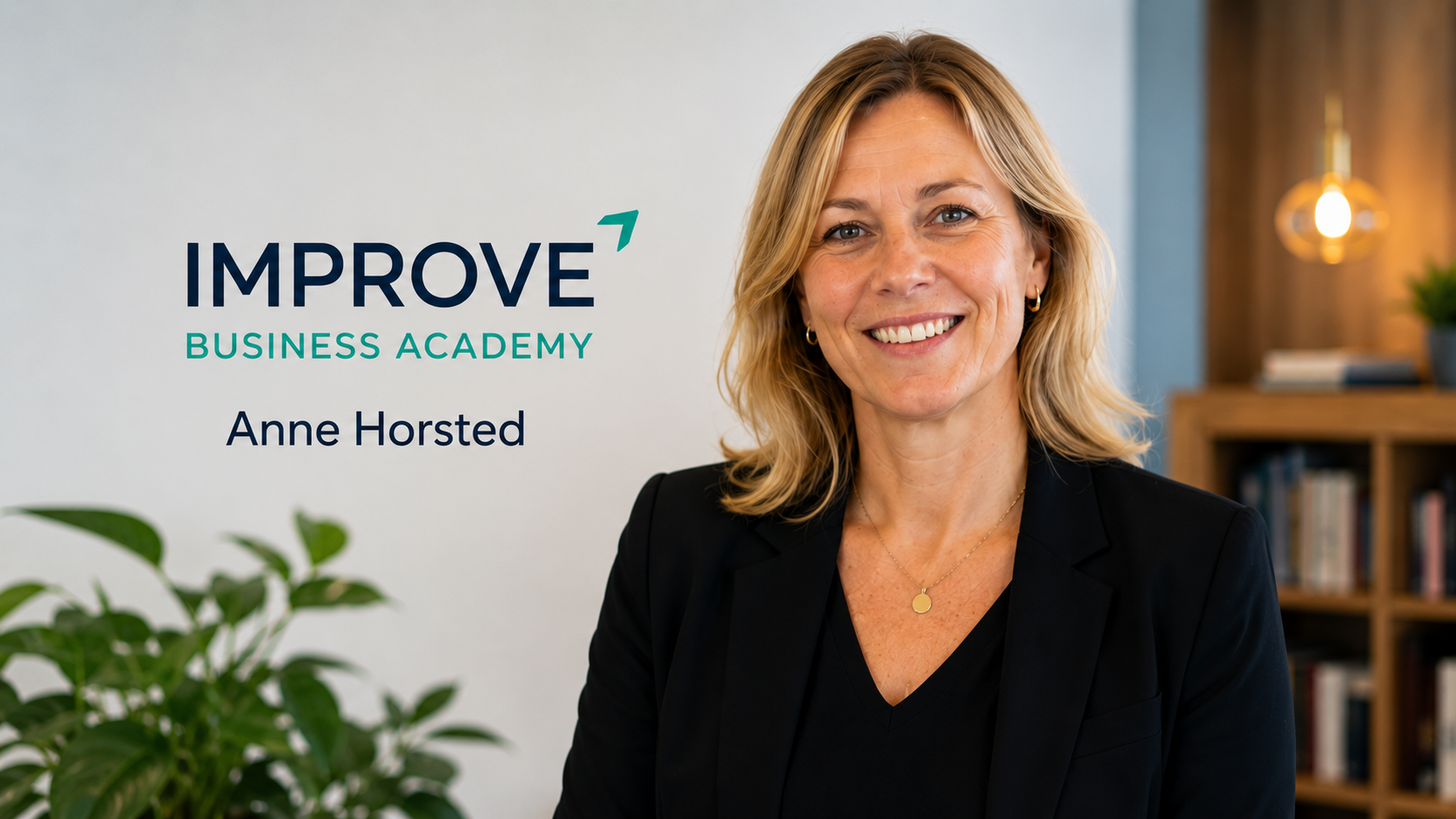
That gap is where Anne Horsted positioned Improve Business Academy. Instead of building another generic coaching business centered on motivational language, Horsted focused on practical learning tied to real operational challenges entrepreneurs face every day.
The rise of Anne Horsted Improve Business Academy reflects a growing frustration with business advice that sounds impressive online but collapses under real-world pressure. Entrepreneurs increasingly want systems they can apply immediately — not frameworks designed mainly for presentation slides.
The Problem Improve Business Academy Was Really Solving
Many small business owners struggle with the same issue: access to information is no longer the problem. Execution is.
Courses, podcasts, webinars, and online communities already exist in abundance. What founders often lack is clarity about which actions actually matter and how to implement them consistently while managing financial stress, staffing concerns, and market uncertainty.
Improve Business Academy entered a market filled with educational noise. The company’s positioning leaned toward structured guidance rather than inspiration-heavy coaching. That distinction helped it appeal to entrepreneurs looking for practical decision-making instead of broad motivational narratives.
For many clients, the frustration was psychological as much as operational. They were consuming advice constantly while still feeling stuck.
Horsted appeared to understand that contradiction early.
Why Anne Horsted Saw the Industry Differently
The online coaching economy rewards visibility. But visibility alone rarely builds durable trust.
Anne Horsted approached business education with a more measured philosophy. Instead of emphasizing personality-driven branding above everything else, her focus appeared centered on consistency, practical implementation, and sustainable growth.
That mindset matters because many entrepreneurs today are skeptical of exaggerated success narratives. They want educators who acknowledge uncertainty, operational pressure, and the uneven reality of building companies.
There is also a broader cultural shift happening around professional learning. Founders increasingly value specificity over hype. They prefer advisors who understand financial limitations, staffing challenges, and customer retention issues — not just growth metrics.
For Anne Horsted Improve Business Academy, that realism became part of the company’s positioning.
And realism is surprisingly rare in modern business coaching.
What Made Anne Horsted Different From Competitors
The coaching and business education sector often prioritizes scale above depth. Programs are designed for mass enrollment, automated delivery, and aggressive upselling.
Anne Horsted appeared to move in a different direction.
Rather than building a brand around endless expansion, the company focused on creating learning environments that felt applicable to real business conditions. That difference may sound subtle, but clients notice it quickly.
Entrepreneurs are increasingly selective about where they spend attention and money. They want directness. Clear communication. Actionable thinking.
Not another performance.
This gave Improve Business Academy a quieter but more stable positioning inside a noisy industry. The company’s value came less from spectacle and more from trust accumulation over time.
That is slower to build.
But often harder to replace.
The Decision That Changed Improve Business Academy
One defining decision appears to have been resisting the pressure to become purely content-driven.
Many education businesses optimize almost entirely for algorithms, audience growth, and constant visibility. While effective short term, that model can weaken educational quality over time.
Anne Horsted instead positioned Improve Business Academy closer to applied business development rather than entertainment-based coaching. That choice likely limited rapid scale initially, but it strengthened long-term credibility.
The decision revealed something important about the company’s philosophy: depth mattered more than volume.
In a market chasing constant attention, restraint became strategy.
Turning Mission Into Operations
Educational businesses often struggle operationally because customer expectations evolve quickly. Clients now expect accessibility, personalization, and practical outcomes simultaneously.
For Improve Business Academy, operational discipline appears connected to maintaining relevance without overcomplicating delivery. That includes simplifying learning structures, improving communication, and focusing on implementation rather than endless theory.
There is also increasing pressure around transparency in coaching industries. Customers are more skeptical of inflated promises and vague transformation claims.
That forces companies to operationalize trust.
Hiring, curriculum development, customer support, and program structure all become part of the brand itself. Businesses that fail operationally eventually lose credibility regardless of marketing strength.
Horsted’s approach appears grounded in understanding that education businesses succeed when clients feel more capable, not more dependent.
That is a harder model to sustain.
The Difficult Reality of Scaling
Scaling educational companies introduces tensions many outsiders rarely see.
As Improve Business Academy expanded, maintaining consistency likely became more difficult. Personalized learning becomes harder at scale. Customer expectations rise. Competition intensifies.
The online business education market is also increasingly saturated. New programs launch constantly, often competing aggressively on price, visibility, or simplified promises.
That environment creates pressure to move faster than operational systems allow.
For founders like Anne Horsted, the challenge becomes protecting educational quality while adapting to shifting customer behavior. Digital audiences are impatient. Trust cycles are shorter. Attention moves quickly.
Scaling under those conditions requires discipline more than momentum.
And discipline rarely generates headlines.
What Anne Horsted’s Story Actually Reveals
The rise of Anne Horsted Improve Business Academy says something important about modern entrepreneurship: founders are no longer looking only for information. They are looking for clarity.
That distinction matters.
The businesses gaining trust today are often the ones reducing complexity rather than adding more noise. In crowded industries, calm execution can become a competitive advantage.
Horsted’s approach reflects a quieter style of leadership — one less focused on spectacle and more focused on practical usefulness.
In business education, that may ultimately matter more than visibility itself.